Table of contents
- 1. Nainital – The Beautiful Lake Town
- 2. Rishikesh – The Yoga Capital of the World
- 3. Auli – A Skiing Paradise
- 4. Jim Corbett National Park – A Wildlife Sanctuary
- 5. Mussoorie – The Queen of Hills
- 6. Haridwar – A Spiritual Haven
- 7. Valley of Flowers – A UNESCO World Heritage Site
- 8. Kausani – The Switzerland of India
- 9. Binsar – A Tranquil Getaway
- 10. Ranikhet – The Queen’s Land
- Best Time to Visit Uttarakhand: A Season-by-Season Breakdown
Uttarakhand, often referred to as Devbhoomi (Land of Gods), is one of the most picturesque states in India. With its lush green valleys, snow capped peaks, rivers, and serene hill stations, Uttarakhand has earned its place as a top tourist destination. Whether you’re a nature lover, adventure seeker, or spiritual traveler, the state offers something for everyone. Here are the top 10 best places to visit in uttarakhand that you should not miss.
1. Nainital – The Beautiful Lake Town
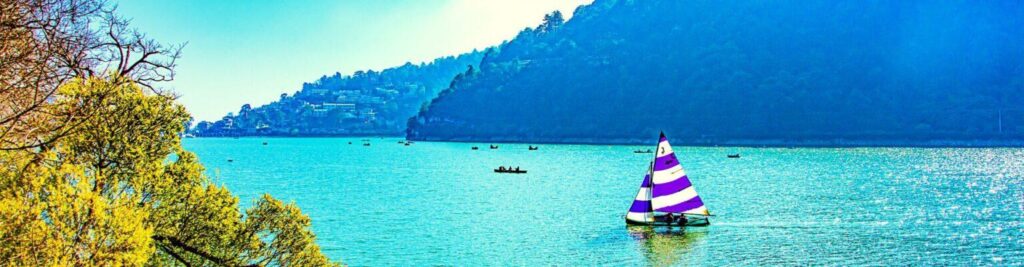
If you were to design the perfect hill town from scratch, chances are it would end up looking a lot like Nainital. Perched in the Kumaon Himalayas at an altitude of roughly 2,084 meters, this lakeside gem is built around the shimmering, crescent-shaped Naini Lake, a body of water so serene and reflective that it looks like a mirror placed gently between two forested ridges. Local legend holds the lake sacred, believed to be the spot where the eyes (naina) of Goddess Sati fell, making every boat ride here feel like a quiet act of reverence as much as a recreational one. The spiritual, the scenic, and the recreational all coexist here in a kind of effortless harmony that few places in India manage to pull off.
Top Attractions and Activities in Nainital
Beyond the lake itself, Nainital is layered with experiences that can fill a trip of any length. The Snow View Point, reached via a short ropeway ride, offers jaw-dropping panoramas of the snow-capped Himalayan ranges on clear days, the kind of view that makes you feel both tiny and profoundly alive at the same time. Tiffin Top, also called Dorothy’s Seat, is a quiet hilltop clearing where you can sit with a packed lunch and watch the clouds roll in over the valleys below. The Naina Devi Temple on the northern bank of the lake draws thousands of devotees daily and is one of the most important Shakti Peethas in Hinduism. For families, couples, adventure hikers, and spiritual pilgrims alike, Nainital manages to be the perfect answer every single time the question is, “Where should we go?”
2. Rishikesh – The Yoga Capital of the World
There’s a reason why Rishikesh has become one of the most talked-about travel destinations not just in India but across the entire world. Sitting at the foothills of the Himalayas, where the Ganges descends from the mountains onto the plains, this small yet extraordinary town manages to hold two very different identities simultaneously, and somehow, they make each other better.
On one hand, Rishikesh is the Yoga Capital of the World, a designation it has rightfully earned through decades of attracting seekers, meditators, philosophers, and spiritual tourists from every continent. On the other hand, it is an absolute adventure mecca, offering white-water rafting, bungee jumping, cliff jumping, and trekking with a kind of ease and accessibility that few adventure towns in the world can match. You can spend the morning chanting in an ashram and the afternoon screaming your way down grade IV rapids on the Ganges, and somehow both experiences feel completely natural.
Must-Do Experiences in Rishikesh
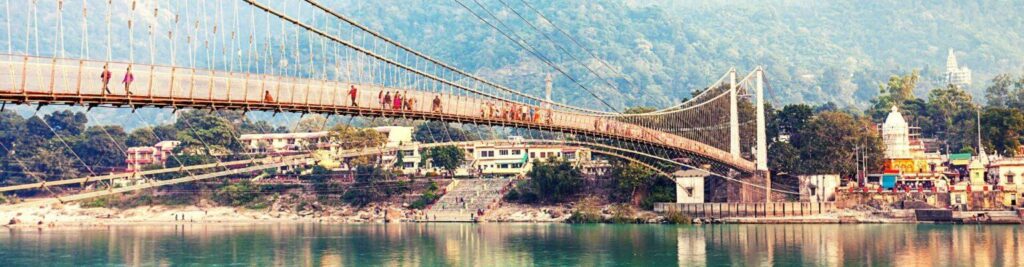
The evening Ganga Aarti at Triveni Ghat is, without a shadow of a doubt, one of the most emotionally stirring experiences in all of India. As the sun goes down and priests in saffron robes swing massive fire lamps over the dark waters of the Ganges, the entire riverbank fills with the sound of bells, chants, and the warm glow of floating diyas. It is the kind of scene that stays with you for years. The Beatles Ashram (officially Chaurasi Kutia), where the Fab Four famously retreated for meditation in 1968, is now an open-air art gallery of sorts, its walls covered in colorful murals and graffiti, drawing music lovers and history buffs in equal measure. And of course, the iconic Lakshman Jhula and Ram Jhula suspension bridges, draped in orange prayer flags and bustling with life at all hours, are as much a symbol of Rishikesh as the river itself.
3. Auli – A Skiing Paradise
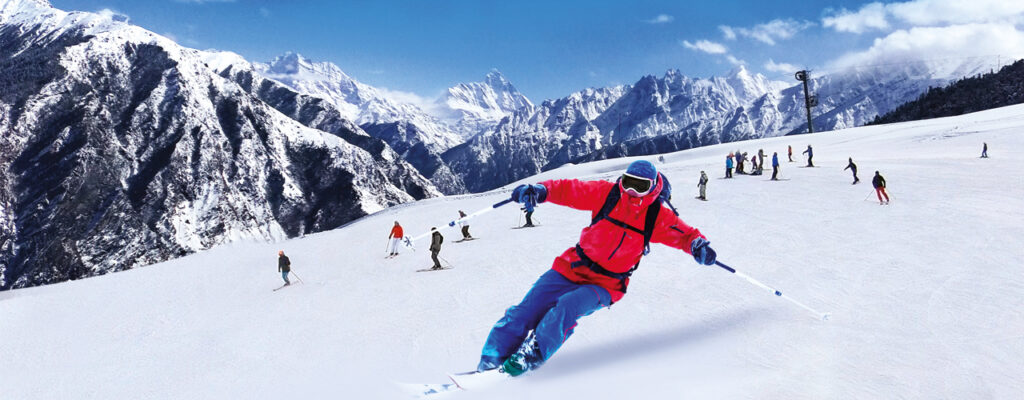
Ask any skiing enthusiast in India where to go, and the answer is almost always Auli, and for very good reason. Located at an altitude ranging from 2,519 to 3,049 meters in the Garhwal region, Auli is home to some of the best ski slopes in Asia, with consistent snow cover from December through March and views of Nanda Devi, Mana Parbat, and Kamet that make the already exhilarating sport feel downright transcendent.
The Auli Ropeway, stretching approximately 4 km and connecting Joshimath to Auli, is one of the longest ropeways in Asia and offers a panoramic bird’s-eye view of the snow-drenched landscape that alone is worth the trip. But here’s what most people don’t tell you about Auli: it is equally spectacular in summer. When the snow melts, the slopes transform into lush green meadows carpeted with wildflowers, making them perfect for camping, mountain biking, and some of the most scenic trekking trails in the Himalayas. Auli is not a seasonal destination; it is a year-round experience that changes its costume with the seasons but never stops being magnificent.

4. Jim Corbett National Park – A Wildlife Sanctuary
Jim Corbett National Park holds the rare distinction of being India’s oldest national park, established in 1936 during the British era and named after the legendary naturalist and hunter-turned-conservationist Jim Corbett. Spread across more than 1,300 square kilometers in the Nainital district, this is the kind of place where every safari feels like stepping into a David Attenborough documentary: dense sal forests, tall elephant grass, winding riverbeds, and the constant, thrilling possibility of a Bengal tiger appearing around the next bend.
The park is home to over 50 species of mammals, including tigers, elephants, leopards, deer, and gharials, alongside more than 600 species of birds, making it one of the finest birding destinations in Asia. The thrill of spotting a tiger in its natural habitat is genuinely one of those experiences that recalibrates your entire understanding of the natural world. There is nothing quite like the combination of fear, awe, and profound respect that comes with locking eyes with a wild tiger even from a safe distance.

5. Mussoorie – The Queen of Hills
Mussoorie has been enchanting visitors for well over a century, and somehow it still manages to feel fresh, romantic, and utterly irresistible. Perched at around 2,005 meters above sea level in the Dehradun district, this storied hill station earned its title as the “Queen of Hills” not through luck but through a combination of spectacular natural beauty, colonial charm, and an atmosphere that seems to encourage slow mornings and long, wandering evenings.
The famous Mall Road is the beating heart of Mussoorie a promenade lined with shops, cafes, and restaurants where couples stroll hand in hand, families share plates of local snacks, and everyone seems to be in a slightly better mood than usual. Kempty Falls, located about 15 km from the main town, is a multi tiered waterfall that cascades down rocky cliffs into a natural pool below during monsoon season, the sheer volume of water and the lush green surroundings make it look almost unreal. Gun Hill, the second-highest point in Mussoorie, offers a ropeway ride that deposits you at a viewpoint with sweeping views of the Himalayan ranges on clear days. Mussoorie is not just a destination it is a feeling, a mood, a memory in the making.
6. Haridwar – A Spiritual Haven
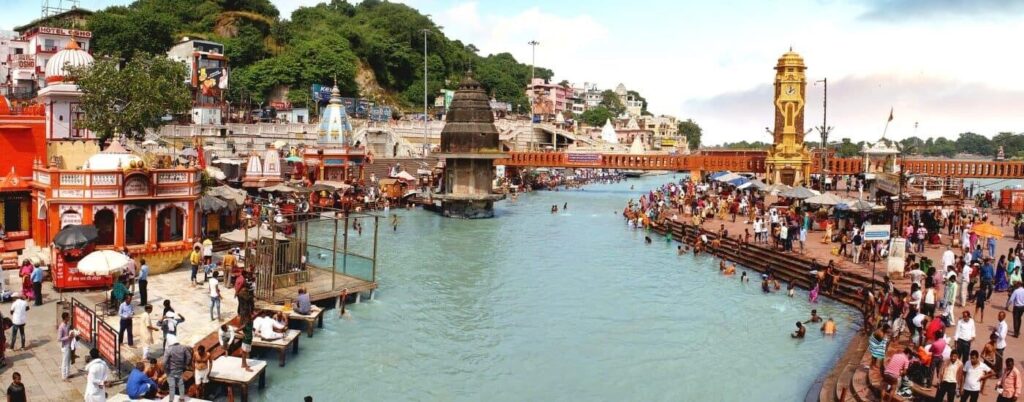
Haridwar emerged as Uttarakhand’s most visited destination in 2025, attracting over 3.42 crore pilgrims in a single year a number that speaks to the city’s unrivalled spiritual magnetism. One of the seven sacred cities of Hinduism, Haridwar sits at the precise point where the Ganges River exits the Himalayas and begins its long journey across the plains of northern India, and this geographical significance has made it one of the holiest pilgrimage sites in the world for thousands of years.
The city vibrates with a kind of spiritual energy that is tangible even to non-religious visitors the smell of incense, the sound of temple bells, the sight of orange-robed sadhus walking barefoot along the ghats, and the constant, soothing rush of the Ganges create an atmosphere unlike anything you will find anywhere else on earth.
Har Ki Pauri, the most sacred ghat in Haridwar, is where the legendary Ganga Aarti takes place every evening at sunset, drawing thousands of devotees and tourists who stand shoulder to shoulder along the river steps, holding tiny flame-lit diyas and releasing them onto the water in one of the most profound and visually stunning rituals in all of Hinduism. The Mansa Devi Temple and Chandi Devi Temple, both perched atop hills and reachable by ropeway, complete the spiritual itinerary of this extraordinary city.
7. Valley of Flowers – A UNESCO World Heritage Site
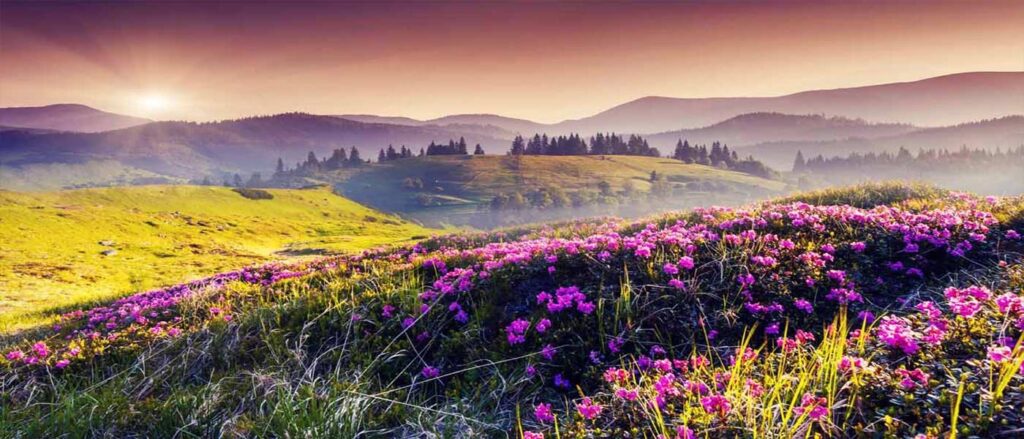
If you have ever doubted that the natural world is capable of genuine artistry, a visit to the Valley of Flowers will settle that question permanently. Nestled in the Chamoli district at an altitude of approximately 3,658 meters, this UNESCO World Heritage Site is an alpine meadow that stretches for roughly 8 km and transforms into one of the most visually spectacular landscapes on the planet during the monsoon season, typically July through September.
The valley hosts over 500 species of wildflowers, including rare Himalayan orchids, brahmakamal, blue poppies, and anemones, all blooming simultaneously in a riot of colour so vivid and dense that photographs barely do it justice. The trek to the valley begins from Govindghat and passes through the charming village of Ghangaria, covering about 17 km one way with a manageable ascent that even moderately fit trekkers can handle.
The Valley of Flowers is not just a trek it is a pilgrimage of a different kind, one that reminds you of the extraordinary, reckless generosity of the natural world. Nearby, the Hemkund Sahib Gurudwara, a sacred Sikh shrine at 4,329 meters surrounded by glacial lakes and snow peaks, adds a spiritual dimension to the journey that makes this region feel truly otherworldly.
8. Kausani – The Switzerland of India
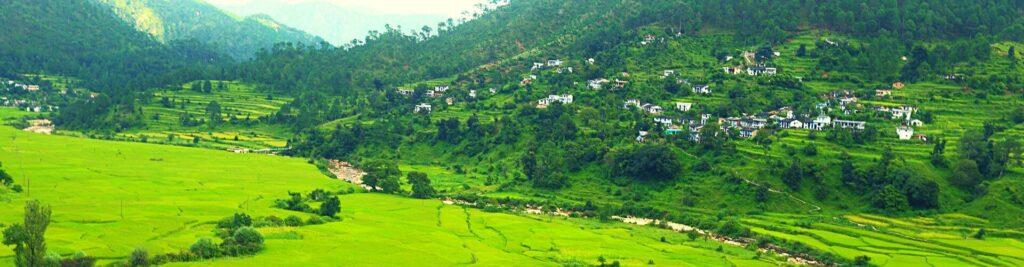
There is a certain kind of traveler the kind who prefers discovery over familiarity, silence over spectacle for whom Kausani is the ultimate Uttarakhand destination. Tucked away in the Bageshwar district at an altitude of about 1,890 meters, Kausani is often called the “Switzerland of India” for its expansive panoramic views of snow-capped Himalayan peaks, including Nanda Devi, Trishul, and Panchuli a 300 km stretch of horizon that literally takes your breath away on a clear morning.
Mahatma Gandhi once visited Kausani and was so moved by the sunrise over these peaks that he called it the best sunrise he had ever witnessed, a sentiment that has been echoed by virtually every visitor since. The Kausani Tea Estate, one of the highest tea gardens in the world, produces a distinctive Himalayan tea with a delicate, earthy flavour, and a stroll through its terraced rows with mountain views in the background is one of those simple, perfect travel moments that you end up describing to people for years. Kausani’s unhurried pace, its bird-filled forests, and its extraordinary visual generosity make it an ideal destination for couples, nature writers, photographers, and anyone who simply needs to slow down and remember what quiet feels like.
9. Binsar – A Tranquil Getaway
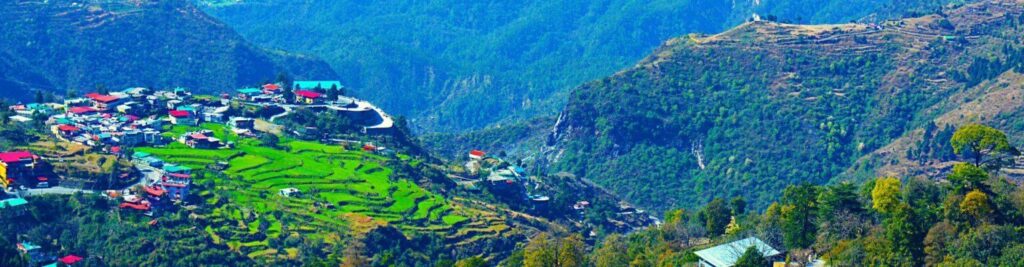
Binsar is the kind of place that feels like a secret even after you’ve arrived and the best part is that most of the world still doesn’t know about it. Located in the Almora district at an elevation of about 2,412 meters, Binsar is enveloped by the Binsar Wildlife Sanctuary, a protected forest covering roughly 47 square kilometers that is home to leopards, Himalayan bears, deer, and over 200 species of birds.
The forest here is ancient and dense, filled with oak, rhododendron, and pine trees that create a canopy so thick and green that sunlight filters through in golden shafts that make the entire place look like a painting. The jewel of Binsar is the legendary Zero Point, a clearing in the forest from which you get a staggering 360-degree panoramic view of the Himalayan ranges, including Kedarnath, Chaukhamba, Trisul, Nanda Devi, and Panchuli arguably the finest viewpoint in all of Uttarakhand for those willing to make the effort.
Stargazing at Binsar, far from the light pollution of any major city, is a genuinely humbling experience, with the Milky Way visible on clear nights with a clarity that feels almost prehistoric. Binsar is not a destination for those seeking entertainment it is a destination for those seeking restoration.
10. Ranikhet – The Queen’s Land
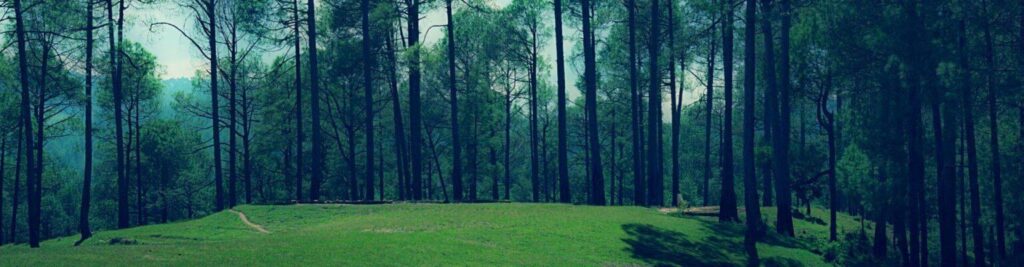
Ranikhet, whose name translates to “The Queen’s Land,” carries its royal title with quiet dignity rather than fanfare, and that restraint is precisely what makes it so appealing. Situated in the Almora district at about 1,829 meters above sea level, Ranikhet is a Cantonment town administered by the Indian Army, which means it has been preserved from the unregulated commercial development that has gradually diminished the charm of many other Uttarakhand hill stations.
The result is a town that still looks, feels, and breathes like old India — pine-lined avenues, stone bungalows with garden verandahs, apple and pear orchards, and a general atmosphere of unhurried calm that is increasingly rare to find. The Jhula Devi Temple, dedicated to Goddess Durga and festooned with thousands of bells offered by devotees whose wishes have been granted, is one of the most unique religious sites in Uttarakhand, its constant gentle ringing creating a hypnotic ambient soundtrack throughout the day.
The views of the Himalayan peaks from Ranikhet’s Chaubatia Gardens and Upat Meadow, especially at sunrise when the peaks turn from grey to gold to brilliant white, are as fine as anything you will find in the state. Ranikhet asks nothing of you — no strenuous hikes, no crowded tourist circuits — just an openness to sitting with the mountains and letting the world slow down.
Best Time to Visit Uttarakhand: A Season-by-Season Breakdown
Uttarakhand is genuinely a year-round destination, but the experience varies dramatically depending on when you go, and choosing the right season for the right destination can make an enormous difference to your trip. Summer (March to June) is peak travel season for most hill stations, with pleasant temperatures between 15°C and 25°C making it ideal for Nainital, Mussoorie, Kausani, Ranikhet, and Binsarthis is when the rhododendrons are in full bloom and the trails are at their most accessible.
Monsoon season (July to September) brings lush green landscapes and the blooming of the Valley of Flowers, though some roads in higher altitudes can be prone to landslides. Autumn (October to November) offers crisp, clear skies and the best visibility for mountain views, making it perfect for trekking and photography. Winter (December to February) transforms Auli into a ski resort and blankets the higher altitude destinations in snow, while Haridwar and Rishikesh remain accessible and pleasantly uncrowded the government has also reduced GST on hotel tariffs to make travel more affordable across key destinations including Nainital, Mussoorie, Auli, Haridwar, and Rishikesh.
| Season | Best Destinations | Ideal For |
|---|---|---|
| Summer (Mar–Jun) | Nainital, Mussoorie, Kausani | Families, couples, hill station lovers |
| Monsoon (Jul–Sep) | Valley of Flowers, Rishikesh | Trekkers, nature photographers |
| Autumn (Oct–Nov) | Binsar, Ranikhet, Auli | Hikers, mountain view enthusiasts |
| Winter (Dec–Feb) | Auli, Haridwar, Rishikesh | Skiers, spiritual seekers |
Conclusion
Uttarakhand is not simply a travel destination it is an education in what the natural world, human spirituality, and sheer geographic luck can produce when they work together over millennia. From the sacred ghats of Haridwar to the silent forests of Binsar, from the ski slopes of Auli to the flower-carpeted meadows of the Valley of Flowers, this state packs more variety, beauty, and emotional depth into its borders than most countries can claim across their entire territory. With over 6 crore visitors in 2026 and the state actively investing in infrastructure and connectivity, there has never been a better time to explore Uttarakhand. Pack your bags, leave your itinerary with some breathing room, and let Devbhoomi surprise you — because it always, always does.
FAQs
October and November are widely considered the best months for a first-time visit to Uttarakhand. The monsoon rains have cleared, leaving the landscapes lush and vivid, the skies are crystal clear for mountain views, temperatures are comfortable across most elevations, and the tourist crowds are thinner than in peak summer. It’s the season when Uttarakhand is at its most photogenic and most accessible simultaneously.
Yes, Uttarakhand is generally considered one of the safer states for solo female travelers in India. The hill towns are relatively calm, the locals are known for their warmth and hospitality, and popular destinations like Rishikesh, Nainital, and Mussoorie have well-developed tourism infrastructure. As with any travel, exercising standard precautions — informing someone of your itinerary, staying in reputable accommodations, and avoiding isolated trails after dark — is always advisable.
To do justice to even the most popular destinations, plan for a minimum of 10–14 days. A well-designed itinerary might combine Haridwar and Rishikesh (3 days), Mussoorie and Dehradun (2 days), Nainital and Jim Corbett (3 days), and then either Auli, Kausani, or the Valley of Flowers (3–4 days) depending on your interests and the season.
Yes, visitors require an entry permit to access the Valley of Flowers National Park, which is issued at the Forest Department checkpost in Ghangaria, the last village before the valley. The permit fee is nominal and covers a single day’s entry. The park is open annually from June to October, with peak blooming typically occurring in July and August.
While the entire state carries deep spiritual significance — it is, after all, called Devbhoomi — Haridwar and Rishikesh are the two cities that most powerfully embody Uttarakhand’s spiritual identity. Haridwar, with its ancient ghats, temples, and the mesmerizing Ganga Aarti, is the more traditionally devotional of the two, while Rishikesh offers a broader spiritual experience that encompasses yoga, meditation, ashram life, and the philosophical traditions of the Himalayas.