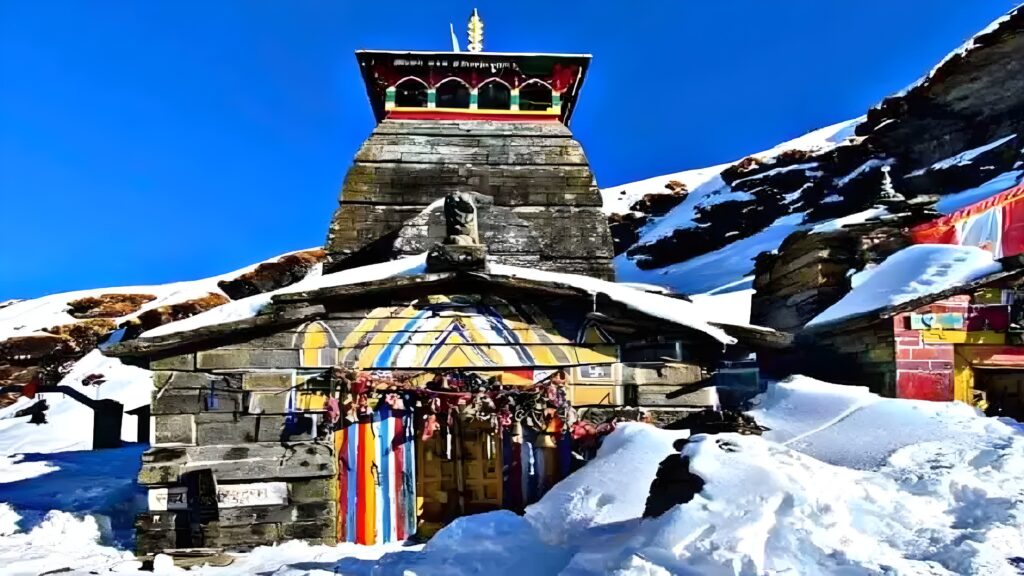
Imagine standing at the doorstep of the highest Shiva temple in the world, surrounded by a sea of rhododendron blossoms, the crisp Himalayan breeze brushing your face, and snow-capped giants watching silently from the horizon. That’s the Tungnath Trek in a single breath — and yet, no single sentence can truly capture what this trail offers. Nestled deep in the Garhwal Himalayas of Uttarakhand, the Tungnath trek is one of those rare journeys that speaks equally to the soul of a pilgrim and the heart of an adventurer. Whether you’re a first-time trekker looking for a manageable but jaw-dropping trail, or a seasoned mountain wanderer chasing spiritual depth, Tungnath is a destination that punches way above its weight.
What’s even more incredible is that this trail, which takes you to an altitude of 3,680 metres (12,073 feet) at the temple and optionally to 4,000 metres (13,123 feet) at Chandrashila Peak, is considered easy to moderate — making it accessible to families, senior citizens, and solo travellers alike. The trail is well-paved with stone paths, lined with ancient oak and rhododendron forests, and rewards you with views of some of India’s most celebrated Himalayan peaks. If you’ve been sitting on the fence about whether to attempt the Tungnath Trek Guide, consider this your definitive sign and your complete companion — all in one.
What Makes the Tungnath Trek So Special?
Before we dive into routes and logistics, let’s talk about why the Tungnath trek stands apart from the dozens of Himalayan trails in Uttarakhand. There’s something fundamentally different about a path that weaves together mythology, biodiversity, and panoramic beauty in a single 3.5-kilometre stretch. It’s like opening a treasure chest where every layer reveals something new — you begin in dense rhododendron forests buzzing with rare Himalayan birds, pass through open alpine meadows that feel almost otherworldly, and arrive at a temple that has stood for over a thousand years. The trail doesn’t just take you somewhere — it transforms you along the way, which is something very few treks in India can genuinely claim.
What adds another dimension to the experience is the sheer variety of people you meet on this trail. On any given day, you might find yourself walking beside a family of pilgrims from Tamil Nadu, a group of college students from Delhi on their first overnight trek, and a solo backpacker from Europe who stumbled upon Chopta while exploring Uttarakhand without a plan. That mix of humanity, united by one path and one destination, creates a warmth on the trail that’s hard to replicate elsewhere. The trek begins from Chopta, a quaint hamlet often referred to as the “Mini Switzerland of India,” winds through rhododendron forests, grassy meadows, and stone-paved paths, culminating at the ancient Tungnath Temple.
The Spiritual Significance of Tungnath Temple
Tungnath is one of the revered Panch Kedar temples dedicated to Lord Shiva in Uttarakhand, and the shrine is perched at a height of 3,600 metres. The temple itself is considered to be more than 1,000 years old and was discovered by the great philosopher-saint Adi Shankaracharya. Its architecture is a marvel — intricate stonework carved by artisans of a bygone era, rising against a backdrop of eternal snow. The presiding deity here represents the arms of Lord Shiva, a detail rooted in a fascinating piece of mythology that stretches back to the age of the Mahabharata. Standing inside the temple complex, with the sound of bells and the faint smoke of incense curling upward toward the open Himalayan sky, you feel something that’s genuinely difficult to articulate. It’s not just reverence — it’s belonging, as though this place has always been waiting for you.
Tungnath as Part of the Panch Kedar Circuit
According to legend, the Pandavas sought forgiveness for their role in the Mahabharata war, and Lord Shiva eluded them by taking the form of a bull. His body parts appeared at five different locations in Uttarakhand Tungnath being the site where his arms were found. The five Panch Kedar shrines Kedarnath, Rudranath, Tungnath, Madhyamaheshwar, and Kalpeshwar are all considered sacred beyond measure, and Tungnath holds a particularly special position as the highest among them. For pilgrims, the Tungnath temple is not just a religious stop but a spiritual summit a place where the distance between the human and the divine feels almost negligible. Even if you don’t hold any particular religious belief, there’s an undeniable energy at this temple that makes you pause, breathe deeply, and feel genuinely grateful to be alive.
Tungnath Trek at a Glance — Key Stats
Before planning your journey, here’s a quick reference table that covers the most essential details about the Tungnath trek:
| Feature | Details |
|---|---|
| Trek Start Point | Chopta (2,600 m / 8,530 ft) |
| Tungnath Temple Altitude | 3,680 m / 12,073 ft |
| Chandrashila Peak Altitude | 4,000 m / 13,123 ft |
| Trek Distance (one way) | 3.5 km (Chopta to Tungnath) |
| Total Trek with Chandrashila | 5 km (one way) |
| Difficulty Level | Easy to Moderate |
| Duration | 2–3 hours (Chopta to Tungnath) |
| Best Season | April–June & October–November |
| Nearest City | Rishikesh (~200 km) |
| Permits Required | None (nominal fee for wildlife sanctuary) |
The Complete Tungnath Trek Route: Step by Step
Understanding the route before you set foot on the trail is half the battle won. The Tungnath trek route is refreshingly straightforward — no confusing forks, no dangerously narrow ledges, no ropes or technical climbing required. It’s a trail that’s been walked for centuries by pilgrims, shepherds, and traders, and that long history of human footfall has shaped it into one of the most well-defined mountain paths in the country. That said, well-defined doesn’t mean unexciting. Every metre of this trail offers a new perspective, a new angle on the mountains, and a new reason to stop and simply stare.
Base Camp — Chopta, the Mini Switzerland of India
Surrounded by alpine meadows and dense forests, the Chopta region is often referred to as the “Mini Switzerland of India.” Sitting at an altitude of approximately 2,600 metres, Chopta serves as the base camp for the Tungnath trek and is itself a destination worth spending time in. The meadows here, locally known as bugyals, roll out like a green carpet in summer and transform into a pristine white wonderland in winter. Chopta is small — a cluster of guesthouses, dhabas, and camping sites — but its scenery is enormous. Arriving here after the long drive from Rishikesh, as the trees get taller and the air gets colder, you get the very first hint of what lies ahead. Spend your first evening at Chopta acclimatizing, exploring the surroundings on foot, and breathing in air that tastes nothing like what you’re used to back in the city.
Chopta to Tungnath Temple (3.5 km)
The trek from Chopta to Tungnath spans 3.5 km and is considered moderately difficult. For beginners, it typically takes 2–3 hours to complete. However, experienced trekkers or those with good stamina can reach Tungnath in under 90 minutes. The trail begins with a gentle incline through a gorgeous canopy of rhododendron trees — and if you’re trekking in April or May, these trees will be ablaze with crimson and pink blossoms, making the entire forest look like a painting that hasn’t quite decided to be real. As you gain altitude, the trees begin to thin, and the trail opens up to sweeping grasslands. The stone-paved path, which has been maintained to make the trek easier for pilgrims, keeps you grounded even as the views around you become increasingly surreal. By the time you spot the temple’s distinctive pagoda-style shikhara against the blue Himalayan sky, you’ll understand why so many trekkers describe their first sight of Tungnath as a moment they’ll carry for the rest of their lives.
The Tungnath Chandrashila Trek Extension (1.5 km More)
Here’s where the tungnath chandrashila trek really earns its reputation as one of Uttarakhand’s finest high-altitude experiences. Another 1.5 km steep trek from Tungnath leads to Chandrashila summit, which offers a majestic view of snow-clad Himalayan peaks including Trishul, Nanda Devi, and Chaukhamba. This additional leg of the journey is steeper and more demanding than the Chopta-to-Tungnath section, and that extra effort is repaid a hundredfold at the summit. At 4,000 metres, Chandrashila offers a full 360-degree panoramic view of the Garhwal and Kumaon Himalayas — a visual experience so overwhelming that many trekkers go completely silent for several minutes, simply absorbing what they’re seeing. Sunrise from Chandrashila is, without exaggeration, one of the most beautiful natural spectacles available to trekkers in India. The golden light spilling across the snow-draped peaks while the valleys below are still cloaked in darkness is the kind of image that makes you want to write poetry, even if you’ve never written a word in your life.
Best Time to Do the Tungnath Trek
The Tungnath trek can technically be attempted across most of the year, but the experience varies dramatically depending on when you go. Choosing the right season is one of the most important decisions you’ll make when planning this trek, and it should be guided by what kind of experience you’re looking for — the riot of colour in spring, the golden stillness of autumn, or the dramatic snow-covered challenge of winter.
Summer Season (April–June)
This is arguably the most popular season for the Tungnath Trek Guide enthusiasts, and for good reason. During summer, trekkers enjoy clear skies, pleasant temperatures, and blooming rhododendrons. The rhododendron forests, which line much of the trail, erupt into a spectacular display of colour — reds, pinks, and whites that make you feel like you’re walking through a botanical garden set against a Himalayan backdrop. Temperatures at Chopta in April hover between 2°C and 15°C, offering comfortable trekking conditions during the day while keeping the nights refreshingly cool. The trail is dry and well-defined, making it ideal for beginners, families with children, and anyone who wants to experience the trek at its most visually lush and accessible.
Autumn Season (October–November)
October and November represent a quieter but equally beautiful window for the Tungnath trek. The monsoon has cleared the air thoroughly by this point, leaving the sky an impossibly deep shade of blue that acts as a perfect canvas for the snow-capped peaks in the distance. The forests have shifted from green to gold and amber, giving the trail a completely different character than it has in summer. The temperatures are dropping but haven’t yet plunged to winter extremes, and the trail is free from snow at most sections. This season attracts fewer crowds than April–June, which means you’ll have a more personal, quieter connection with the mountain. Many experienced trekkers actually prefer autumn for exactly this reason — the trail feels more raw, more honest, and more yours.
Winter Season (December–March)
Winter adds a layer of difficulty and beauty to this already iconic trail. The roads are quieter, the landscapes are frozen in time, and every step feels more personal. The Tungnath temple closes its doors for the winter months, with the deity being relocated to Makkumath village for worship. However, the trek itself remains possible — and for snow enthusiasts, this is actually the most thrilling version of the Tungnath experience. The entire trail is blanketed in thick snow, and reaching Chandrashila in winter, while demanding, is an achievement that fills trekkers with a deep sense of accomplishment. The best time for a winter trek falls between late December and mid-February, when Chopta receives fresh snowfall, transforming the entire region into a breathtaking white landscape. A guide is strongly recommended during this season, as the trail can be obscured and conditions can change rapidly.
How to Reach Chopta — Your Gateway to Tungnath
Getting to Chopta requires a bit of planning since it’s not directly connected to major transport hubs. But that’s part of what makes the whole journey feel like an adventure right from the start. The road journey through the Garhwal hills — past confluences of sacred rivers, through terraced hillside villages, and around hairpin bends with jaw-dropping valley views — is itself a prelude to the magic waiting at the trail’s end.
By Air
Jolly Grant Airport in Dehradun is the closest airport, approximately 220 km from Chopta. From the airport, you can hire a cab or take shared transport to Rishikesh, and from there continue to Chopta. This is the fastest way to reach the region from other parts of India and is ideal if you have limited time.
By Rail
The nearest rail line is at Haridwar, from where you can avail a cab or bus service toward Sari village or Chopta. Haridwar is extremely well-connected to major Indian cities, including Delhi, Mumbai, and Kolkata. From Haridwar, the road journey to Chopta takes approximately 6–7 hours, passing through the charming towns of Devprayag, Srinagar (Garhwal), and Rudraprayag.
By Road
The journey from Delhi to Chopta covers approximately 450–470 km via Rishikesh, Devprayag, Rudraprayag, and Ukhimath, taking around 12–14 hours by car or tempo traveller. Many trekking groups from Delhi prefer to drive overnight, breaking the journey with a stop in Rishikesh or Devprayag. The road is well-maintained for most of the route, though the final stretch to Chopta involves narrow mountain roads that require a skilled driver and some patience. The route itself — Haridwar – Rishikesh – Devprayag – Srinagar – Rudraprayag – Ukhimath – Chopta — is one of the most scenic drives in Uttarakhand.
Suggested Itinerary for the Tungnath Trek (3 Days)
A well-structured itinerary makes a world of difference on any mountain trek, and the Tungnath trek is no exception. Here’s a practical 3-day plan that balances the drive, the trek, and the spiritual experience without rushing anything:
Day 1 — Rishikesh to Chopta (Drive, approx. 6–7 hours): Start early from Rishikesh to make the most of daylight. The drive through the Garhwal valleys, with a stop at the Devprayag confluence where the Bhagirathi and Alaknanda rivers merge, is itself a highlight. Arrive at Chopta by afternoon, check into your guesthouse or camp, and spend the evening acclimatizing and exploring the meadows. Sleep early — you have an early morning ahead.
Day 2 — Chopta to Tungnath to Chandrashila and Back: This is the crown jewel of your trip. Start trekking at first light for the best chance of clear skies at Chandrashila. The trail from Chopta to Tungnath Temple and then up to Chandrashila summit covers approximately 5.5 km one way at an altitude gain from around 7,874 ft to 13,123 ft. Spend time at the Tungnath temple, then push on to Chandrashila for the panoramic views. Pack a lunch to enjoy at the summit. Descend to Chopta by evening and watch the sunset over the meadows.
Day 3 — Optional Deoria Tal Visit, Then Drive Back: Day 3 can include a drive to Sari Village and a trek to Deoriatal, where you can enjoy the reflection of the mighty Chaukhamba peak on the lake surface, before driving back to Dehradun. Deoria Tal is a stunning emerald lake at about 2,438 metres that adds a perfect finale to this Uttarakhand adventure. It’s about a 2.5 km easy trek from Sari village.
Where to Stay on the Tungnath Trek
Accommodation along the Tungnath trek has improved significantly in recent years, moving well beyond the bare-bones experience that earlier trekkers had to endure. Chopta, being the base camp, offers the widest range of options from basic guesthouses and simple dhabas with attached rooms, to comfortable tented campsites that let you sleep under a sky full of stars. Lately, some budget accommodations and lodges have opened up at Tungnath itself, mainly operated by local priests with limited amenities these can be booked on arrival. For a more comfortable experience, staying at Chopta is recommended, as facilities there are considerably better. If you’re trekking with a package operator, many include Swiss cottage tents or deluxe camps with meals a great way to enjoy the mountains without worrying about logistics. Keep in mind that ATMs and petrol pumps are not available at Chopta, so carry enough cash before leaving Gopeshwar or Ukhimath.
Essential Packing List for the Tungnath Trek
Packing smart is just as important as trekking smart. The altitude, variable weather, and occasionally remote nature of the Tungnath trek demand that you carry the right gear — not necessarily the most expensive, but definitely the most appropriate. Think of your backpack as a conversation between where you’re going and who you are as a trekker. Overpack, and the mountain will tax you physically. Underpack, and it’ll tax you in comfort and safety.
Your essentials should include warm layered clothing — a thermal base layer, a mid-layer fleece, and a waterproof outer jacket — along with trekking pants, gloves, and a woollen cap. Comfortable shoes with good grip and ankle support are critical; waterproof options are strongly recommended, especially for winter or monsoon trekking. Carry at least 2 litres of water, high-energy snacks like nuts, nutritional bars, and glucose biscuits, and a basic first-aid kit that includes altitude sickness medication (consult a doctor beforehand). Dark UV-protection sunglasses are essential at this altitude, where UV radiation is significantly stronger than at sea level. A trekking pole can be a real knee-saver on the descent, and a lightweight rain poncho can be a lifesaver if the clouds decide to open up unexpectedly.
Top Tips to Make the Most of Your Tungnath Trek
Every experienced Himalayan trekker has a set of lessons learned the hard way — and this guide saves you from having to learn them yourself. Think of these tips as the wisdom of the trail, distilled for your benefit.
Start your trek as early as possible — ideally by 7:00 AM — to beat the afternoon clouds that often roll in and obscure the views, especially toward Chandrashila. Spending a night in Chopta before trekking is essential to avoid altitude sickness — acclimatization at base level makes a significant difference in how your body responds at higher altitudes. Stay well-hydrated throughout the trek, even if you don’t feel particularly thirsty, as the dry mountain air can be deceptive. Mobile network coverage is patchy at best — BSNL and Jio tend to work better than other networks, but don’t count on connectivity for navigation. Download offline maps of the area before you leave the city.
Respect the environment as deeply as you respect the trail itself. Avoid plastic, carry trash bags, and respect local customs — this is both eco practice and a sign of respect for the communities that call this region home. The Tungnath region falls within the Kedarnath Wildlife Sanctuary, and keeping it pristine is a collective responsibility. Don’t feed wildlife, don’t pick flowers, and make sure your campfire (if allowed) is fully extinguished before you move on.
Wildlife and Nature Along the Trail
The Tungnath trek is a nature lover’s paradise that often gets overshadowed by its spiritual reputation — and that’s a genuine shame, because the biodiversity along this trail is extraordinary. From Koklass pheasants to the Himalayan monal and nesting pied thrush, the trail is a birdwatcher’s dream. The snow partridge, typically spotted only in winter, adds another layer of excitement for birding enthusiasts. The Himalayan monal a spectacularly iridescent pheasant that also happens to be the national bird of Nepal — is commonly seen near the Tungnath and Chandrashila trails, and spotting one in full sunlight is an unforgettable experience. The Himalayan tahr can also occasionally be spotted along the trail for those who are lucky enough.
The flora is equally impressive. Rhododendron forests dominate the lower sections of the trail, giving way to alpine shrubs and grasses as you gain altitude. In summer, wildflowers carpet the meadows in dozens of colours, turning the trail into something that feels more like a garden than a mountain path. The ancient oak trees that shade parts of the route have been standing for generations, their twisted roots gripping the hillside with a quiet tenacity that’s deeply humbling to observe.
Budget Breakdown for the Tungnath Trek
The Tungnath trek is one of the most wallet-friendly Himalayan adventures in India, which makes it even more appealing for budget-conscious travellers who refuse to compromise on the quality of their experiences. Here’s a realistic breakdown:
| Expense | Approximate Cost |
|---|---|
| Transport (Delhi to Chopta, shared cab) | ₹1,200–₹2,000 per person |
| Accommodation at Chopta (per night) | ₹500–₹1,500 per person |
| Meals per day | ₹300–₹600 per person |
| Local Guide (if hired) | ₹1,000–₹1,500 per day |
| Trekking Gear Rental | ₹200–₹500 per day |
| Total Budget (3 days, DIY) | ₹4,000–₹6,000 per person |
| Package Tour (all-inclusive) | ₹8,000–₹12,000 per person |
A budget traveller can complete the Chopta Tungnath trek comfortably with around ₹4,000 to ₹6,000 for 2–3 days, while packages may cost ₹8,000 to ₹12,000 with transport and guides included. The value-for-money ratio here is outstanding — very few treks in the world deliver this level of natural beauty, spiritual depth, and physical achievement for such a modest investment.
Conclusion
The Tungnath Trek is not just a walk up a mountain — it’s a conversation between you and the Himalayas, a dialogue that happens in breathtaking views, ancient temple bells, and the quiet crunch of your boots on stone. Whether you’re doing the straightforward Tungnath trek to the temple, or extending the journey with the exhilarating tungnath chandrashila trek to the summit, every step on this trail is a step worth taking. It’s a trek that welcomes everyone the spiritual seeker, the adventure lover, the nature enthusiast, and the curious first-timer and sends every single one of them home with something they didn’t have when they arrived: a piece of the Himalayas, permanently lodged in their heart.
So pack your bags, lace up your boots, charge your camera, and get moving. The highest Shiva temple in the world, and the 360-degree Himalayan panorama waiting just above it, are more than worth the journey.
Frequently Asked Questions (FAQs)
1. Is the Tungnath Trek suitable for beginners? Absolutely. The Tungnath trek is one of the most beginner-friendly high-altitude treks in India. The trail is well-paved with stone steps, clearly marked, and involves no technical climbing. Families with children and senior citizens regularly complete it with ease, provided they maintain a steady pace and stay hydrated.
2. Do I need a permit for the Tungnath trek? No special permit is required for the basic Tungnath temple trek. However, since the trail passes through the Kedarnath Wildlife Sanctuary, there may be a nominal entry fee. Always check current regulations before departure, as rules can change seasonally.
3. When does Tungnath Temple open and close each year? The Tungnath temple typically opens in late April or early May (around Akshaya Tritiya) and closes in November for winter. During the closure, the deity is shifted to Makkumath village for worship. The trek itself can still be done in winter, but the temple won’t be accessible.
4. How difficult is the Tungnath Chandrashila trek compared to just Tungnath? The tungnath chandrashila trek extension adds 1.5 km of steeper terrain beyond Tungnath, bringing the one-way distance to about 5 km. It bumps the difficulty up from easy-moderate to moderate, but it’s still very much achievable by reasonably fit trekkers. The views at Chandrashila make every extra step absolutely worth it.
5. Can the Tungnath trek be done in a single day from Rishikesh? Technically possible but not recommended. The drive from Rishikesh to Chopta alone takes 6–7 hours. Adding the trek on top of that makes for an exhausting and rushed day with little time to absorb the experience. Spending at least one night at Chopta is strongly advised for both comfort and safety.
For booking-related queries do visit our office at Ramnagar or give us a call