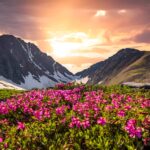
There are places in this world that don’t just impress you — they change you. The Valley of Flowers is one of those rare destinations. Tucked deep inside the Garhwal Himalayas in Uttarakhand, this magical stretch of alpine meadow transforms into a living, breathing canvas of colour every monsoon season. We’re talking about hundreds of wildflower species blooming simultaneously across a valley so beautiful that your brain genuinely struggles to process it as real. If you’ve been thinking about doing the Valley of Flowers Trek for a while now, let 2026 be your year. This guide covers everything — from the best time to visit and what flowers to expect, to permits, costs, altitude safety, and a step-by-step itinerary. Let’s get into it.
What is the Valley of Flowers?
The Valley of Flowers is a high-altitude national park situated in the Chamoli district of Uttarakhand, India, resting at an elevation of approximately 3,600 metres above sea level. It covers 87 square kilometres and is home to numerous species of rare and endangered flora and fauna, including Blue Poppies, Brahmakamal, Cobra Lily, Primula, Asiatic Black Bear, Snow Leopard, and Blue Sheep. Think of it as nature’s own art gallery except the canvases are meadows stretching as far as your eye can see, and the colours change week by week throughout the season. It’s one of those spots where even seasoned Himalayan trekkers find themselves slowing down just to absorb it all.
History and Discovery
You might be surprised to learn that the Valley of Flowers wasn’t always on the map. The valley was totally unknown to the world until 1931, when a British mountaineer Frank S. Smythe and his team lost their way and stumbled upon it by accident. Smythe was so captivated that he returned the following year and wrote about it extensively, giving this hidden paradise its poetic name. Local villagers, of course, had known about it for centuries — and according to Hindu legend, this is the very valley where Lord Hanuman searched for the Sanjeevani herb to revive an injured Lakshmana in the Ramayana. That layering of myth, history, and raw natural beauty is exactly what makes the Valley of Flowers Trek feel like so much more than just a hike.
UNESCO World Heritage Status
The Valley of Flowers is listed as a UNESCO World Heritage Site under Criterion (vii) and Criterion (x) recognitions given for natural beauty of exceptional universal value and for being a habitat of outstanding biodiversity. This status is not just a label; it comes with strict conservation regulations that protect the ecosystem. You cannot camp inside the valley, pick flowers, or bring plastic inside the national park. These rules are enforced, and for good reason — the valley’s fragility is part of what makes it so pristine.
Best Time to Visit Valley of Flowers (Month-by-Month)
If there’s one question every aspiring trekker asks, it’s this: when exactly should I go? The answer depends entirely on what you want to experience. The Valley of Flowers opens around June 1 every year and remains accessible until October 31, weather permitting. The best time to see the valley in full bloom is mid-July to mid-August, when over 500 species of flowers create a carpet of colours across the meadows. But each month has its own personality, and understanding that can help you plan the trip that suits you best.
June — The Valley Awakens
In June, the valley is just opening. Snow patches may still be present, and early wildflowers like primulas and anemones begin to appear. Fewer crowds make this a good option for those who prefer a quieter experience. The trails are less muddy than during peak monsoon, and the air has that crisp, post-winter freshness that serious trekkers absolutely love. If you’re someone who wants the valley to yourself and doesn’t mind a slightly less dramatic bloom, June is an underrated gem of a window. The landscape has a certain raw, awakening quality to it — like watching something beautiful come to life in real time.
July & August — Peak Bloom Season
This is when the Valley of Flowers truly earns its name. In July, the bloom accelerates rapidly — Brahmakamal, blue poppy, and dozens of other species carpet the valley floor. Monsoon rains are frequent, so carrying good rain gear is essential. August marks peak bloom, with the valley at its most colourful and the highest density of flowers. This is also the peak monsoon, so expect rain on most days and slippery trails.
Despite the rain, the valley in July and August is an otherworldly experience. The mist rolling over the mountains, the sound of the Pushpavati River rushing below, and those endless waves of colour — it’s genuinely hard to describe without sounding like you’re exaggerating. This window is the most popular for a reason, and high demand — especially around the Independence Day long weekend — means trek slots often get sold out 30–40 days in advance. Book early.
September & October — The Quiet Finale
By September, the peak monsoon begins to ease, the crowds thin out, and the valley takes on an autumnal charm. Many of the summer blooms are replaced by late-season species. October sees the valley winding down, with the trail sometimes getting the first dusting of snow as winter approaches. For photographers, October’s clear post-monsoon skies offer spectacular mountain views that are often obscured by cloud and rain in July and August. It’s quieter, more contemplative, and genuinely beautiful in a different way.
Flowers You’ll See: Complete Species Guide
Let’s talk about the real stars of this trek — the flowers. The Valley of Flowers is not just casually colourful; it is home to an extraordinary range of Himalayan flora that scientists and botanists travel great distances to study. You can walk through a valley filled with 600+ species of flowers, with the vibrant colour and fragrance of orchids, primulas, and zinnias filling the air. Each visit, even to the same spot, reveals something new depending on the week you’re there.
Rare and Iconic Blooms to Watch For
The Brahmakamal (Saussurea obvallata) is arguably the most sacred flower in the Himalayas, associated with Lord Brahma and used in temple offerings. It blooms in August and is a must-spot for any trekker. The Blue Poppy (Meconopsis aculeata), the state flower of Uttarakhand, is spectacularly rare — you won’t easily find it growing wild like this anywhere else in the accessible Himalayas. Blue Poppy Point at 3,500 metres offers stunning views of the Garhwal Ranges during early morning, and the sight of the Himalayas lit up in golden hues alongside blue poppies is simply magical.
Other species to look for include the Cobra Lily (Arisaema), which looks almost alien in its structure, various Primula species that carpet the meadows in purples and pinks, the fragrant Himalayan Balsam, and the delicate Anemone. If you’re visiting in August, keep an eye out for Aster, Geranium, Marsh Marigold, and the yellow-flowering Potentilla. Serious nature lovers should consider carrying a regional flora identification guide — there is genuinely more to discover here than a single day allows.
Day-by-Day Valley of Flowers Trek Itinerary
The standard Valley of Flowers Trek is typically done over 5 to 6 days, starting from Rishikesh or Haridwar. The total trekking distance is approximately 38 km round trip, with the highest elevation reaching 14,100 ft at Hemkund Sahib. Here’s a day-by-day breakdown of what a typical itinerary looks like.
Day 1–2: Getting to Govindghat and Ghangaria
Your journey begins with a drive from Rishikesh to Govindghat — a distance of approximately 255 km with a drive duration of around 11 hours. Most trekkers overnight at Govindghat and begin the actual trek the following morning. Day 2 involves the trail from Govindghat (1,828m) up to Ghangaria (3,048m), a distance of about 14 km. This trail follows the Lakshman Ganga River and is a gradual but steady climb through dense forest and beautiful gorges. Mules and helicopter services are available for those who prefer not to walk this section. Only BSNL and Jio networks work reliably in Ghangaria, so inform your family beforehand as data connectivity is unreliable. Ghangaria serves as the base camp for the entire trek and has basic guesthouses, dhabas, and a Gurudwara that serves free langar.
Day 3: Into the Valley
This is the day you’ve been waiting for. Start your day early — ideally at dawn — so that you reach the Valley of Flowers by morning and have ample time to explore. The slope at the beginning is almost flat, running parallel to the fast-flowing Pushpavati River. Within 1.5 km of the Ghangaria market, you’ll arrive at the Valley of Flowers National Park checkpost, where the entry opens from 7 AM. The 3-km trail into the valley proper winds through increasingly dramatic scenery, with waterfalls cascading off the cliffs above you and the meadows gradually opening up ahead. Once you’re inside, the sheer scale of the flower fields is staggering — it genuinely looks like something out of a dream sequence. Allow yourself at least 4 to 5 hours inside the valley. We advise you to pack a nutritious lunch and carry at least 2 litres of water, as there are no shops inside the national park.Return to Ghangaria by late afternoon before the rain clouds roll in.
Day 4–5: Descent and Departure
Day 4 is typically reserved for either a rest day in Ghangaria or the optional but highly recommended Hemkund Sahib side trek (detailed in the next section). Day 5 sees trekkers descend from Ghangaria back to Govindghat, from where most people drive toward Joshimath for a night’s rest before heading back to Rishikesh or Haridwar on Day 6. Many trekkers also add a visit to the Badrinath Temple — one of the Char Dhams — on this return journey, as it’s only about 25 km from Govindghat. Mana Village, 3 km from Badrinath and India’s last inhabited village before the Tibet border, is also worth a short visit if time permits
Hemkund Sahib — The Sacred Side Trek
No Valley of Flowers Trek Guide is complete without talking about Hemkund Sahib, and frankly, skipping this would be doing yourself a disservice. Hemkund Sahib is a sacred Sikh pilgrimage site with a Gurudwara and a glacial lake at 4,329 metres. It is a more challenging 6 km trek from Ghangaria with steeper gradients, but mules are available for hire.
The Gurudwara Hemkund Sahib is one of the highest Gurdwaras in the world, and the circular glacial lake surrounding it — at that altitude, reflecting the sky and the snow-capped peaks — is a sight of breathtaking serenity. Whether you’re Sikh or not, the spiritual weight of the place is palpable. Thousands of pilgrims make this climb every year, and the community langar (free meal) served at the Gurudwara is a beautiful act of generosity that you should accept gratefully. The climb is steep and demands a good level of fitness — budget a full day for this side trek, and start no later than 6 AM to comfortably make it back to Ghangaria before dark. The surrounding alpine scenery of rhododendron forests and sky-scraping peaks makes every step upward worth it.
Trek Difficulty and Fitness Requirements
Here’s the honest truth about the Valley of Flowers Trek difficulty: it is rated as easy to moderate, and yes, beginners absolutely can do it. It is a beginner-friendly 6-day trek that offers breathtaking views of wildflowers, waterfalls, and snow-covered mountains. However, “beginner-friendly” doesn’t mean “effortless.” The altitude is real, the monsoon trails can be slippery, and the 14 km trek from Govindghat to Ghangaria will test anyone who hasn’t trained at all. The good news? With even 4 to 6 weeks of consistent preparation, most reasonably fit adults can complete this trek comfortably. What the trek doesn’t demand is technical climbing skills, ropes, or previous Himalayan experience. What it does demand is cardiovascular stamina and the mental willingness to keep walking steadily uphill.
How to Train Before You Go
Start with daily walks of 5 to 8 km at a brisk pace, gradually increasing your distance over 4 to 6 weeks. Stair climbing is excellent preparation — if you live in a city, find a building and do several floors repeatedly. Swimming and cycling are great for building cardiovascular endurance without putting stress on your joints. In the final two weeks before your trek, try hiking on inclined terrain if you have access to it. High altitude acclimatization is a real concern — if individuals cannot acclimatize to high altitude, they may suffer from Acute Mountain Sickness (AMS) or Chronic Mountain Sickness (CMS). Drinking at least 3 to 4 litres of water daily on the trail goes a long way in helping your body acclimatize well.
How to Reach Valley of Flowers
Getting to the Valley of Flowers is itself a journey through some of India’s most spectacular mountain scenery, and it’s worth knowing your logistics before you set out. The nearest major city is Rishikesh, which serves as the standard base for most trekkers.
By Road: From Rishikesh, take a shared taxi or private vehicle via Devprayag, Rudraprayag, Karnaprayag, and Chamoli to reach Govindghat. The drive distance is approximately 255 km with a drive duration of around 11 hours. Overnight buses to Joshimath are also available from Rishikesh and Haridwar, from where local taxis cover the last stretch to Govindghat.
By Air: The nearest airport is Jolly Grant Airport in Dehradun, about 25 km from Rishikesh. From there, a taxi to Govindghat takes approximately 10 to 11 hours. No direct flights operate to Govindghat or Joshimath.
By Rail: The nearest major railway station is Haridwar or Rishikesh. From Haridwar, you can take a taxi or bus to Govindghat. Helicopter services are also available from Govindghat to Ghangaria for those who prefer to skip the 14 km trek upward — the round trip costs approximately Rs 7,000 to Rs 10,000.
What to Pack — Complete Checklist
Packing smart for the Valley of Flowers Trek can genuinely make or break your experience. You don’t want to be that person dragging a massive overloaded backpack up a slippery monsoon trail, but you also don’t want to be caught without proper rain gear at 3,600 metres when the sky opens up. Here’s what you actually need:
Clothing and Footwear: Waterproof trekking shoes with good ankle support are non-negotiable. Pack thermal innerwear, a fleece jacket, a waterproof outer shell or rain jacket, 2 to 3 pairs of moisture-wicking trekking pants, quick-dry t-shirts, woollen socks (at least 3 pairs), a warm beanie, and lightweight gloves for the Hemkund Sahib climb.
Trekking Gear: A 40 to 50 litre backpack with a rain cover, trekking poles (highly recommended for the descent), a headlamp with extra batteries, a reusable water bottle or hydration bladder, and a compact sleeping bag rated to -10°C if you’re camping.
Health and Safety: A basic first aid kit including bandages, antiseptic cream, blister pads, and Diamox (for altitude sickness — consult your doctor before use). Carry ORS sachets, paracetamol, an antidiarrheal, and any personal prescription medications. Sunscreen (SPF 50+) and UV-protective sunglasses are essential at this altitude.
Documents: Government ID proof — original plus 2 photocopies (Aadhaar, Voter ID, or Passport) — is required. Trek insurance is mandatory for high-altitude trekking. Keep digital copies on your phone as backup.
Permits and Costs for 2026
One of the great things about the Valley of Flowers is that it remains remarkably affordable for what it offers. The entry permit costs Rs 150 for a 3-day pass for Indian nationals, and Rs 50 for each additional day. Foreign nationals pay Rs 600 for a 3-day pass and Rs 250 for each additional day. These permits are purchased directly at the ticket counter at the entry gate in Ghangaria — no advance booking is required for the permit itself.
| Expense | Indian Nationals | Foreign Nationals |
|---|---|---|
| 3-Day Entry Permit | Rs 150 | Rs 600 |
| Additional Day | Rs 50/day | Rs 250/day |
| Govindghat–Ghangaria Helicopter | Rs 3,500–5,000 (one way) | Rs 3,500–5,000 (one way) |
| Mule/Porter (Govindghat–Ghangaria) | Rs 800–1,200 | Rs 800–1,200 |
| Guided Package (5–6 days) | Rs 9,999–15,000 | Rs 15,000–25,000 |
Trek operators offer all-inclusive packages ranging from Rs 10,000 to Rs 15,000 per person for a 5 to 6 day itinerary, which includes accommodation, meals, a guide, and permits. If you’re going independently, a rough budget for a 5-day trip from Delhi — covering transport, accommodation, food, and permits — typically lands between Rs 8,000 to Rs 12,000 per person. Ghangaria, the base village of the trek, has limited homestays and lodges, most of which are pre-booked by trekking companies — so advance booking is highly recommended for peak season travel.
Altitude Sickness and Safety Tips
Altitude sickness is the one thing that can cut a dream trek short, and it’s not something to be cavalier about. If individuals cannot acclimatize to high altitude, they may suffer from Acute Mountain Sickness (AMS) or Chronic Mountain Sickness (CMS).The Valley of Flowers sits at around 3,600 metres, and Hemkund Sahib pushes you to 4,329 metres — both altitudes where AMS is a genuine risk if you ascend too quickly without proper acclimatization. The golden rules are straightforward: ascend slowly, never ignore symptoms, and never push through a headache at altitude hoping it will pass on its own.
The classic symptoms of AMS include persistent headache, nausea, dizziness, fatigue, and shortness of breath that feels disproportionate to your exertion level. If you experience any of these, stop ascending immediately, rest, drink water, and if symptoms worsen or include loss of coordination or confusion, descend without delay. It is essential to acclimatize properly, stay hydrated, and follow the guidance of your trek leader.
Spending an extra half-day at Ghangaria before heading up to the Valley is always a smart move. Avoid alcohol for at least the first 48 hours at altitude, eat light and nutritious meals, and get adequate sleep. Diamox (Acetazolamide) can help prevent AMS but must be discussed with a doctor beforehand — it’s not a substitute for proper acclimatization, just a helpful adjunct.
Beyond altitude, the other real safety consideration on this trek is monsoon trail conditions. Trails can become slippery, river crossings can swell, and landslides — while not common on the main trail — do occur in the broader region. Always start your day early, as entry to the Valley opens at 7 AM and starting early gives you more time to explore before afternoon rain clouds roll in. Travel with a reputable guide or organized group if this is your first high-altitude trek, and always register at the forest department checkpost so there’s a record of your entry and expected return.
Conclusion
The Valley of Flowers Trek is one of those rare experiences that delivers on every promise nature makes. It’s not a gruelling expedition that demands years of Himalayan experience — it’s an accessible, deeply beautiful journey that rewards the curious, the patient, and the prepared. Whether you’re a first-time trekker drawn by the Instagram-famous wildflower meadows, or an experienced hiker looking for a soulful Himalayan experience that goes beyond peaks and passes, this trek has something profound to offer. With 2026 dates already filling up fast, now is the time to plan, book, and prepare. Pack smart, go with a good attitude, respect the national park rules, and this valley will give you memories that genuinely last a lifetime. The Himalayas are calling — and in July, they’ll be doing it in full colour.
Frequently Asked Questions
1. Is the Valley of Flowers Trek suitable for complete beginners?
Yes, absolutely. Beginners can do the Valley of Flowers trek, but it is advisable to be in good physical condition and perhaps undertake some shorter treks beforehand to build endurance. With consistent preparation over 4 to 6 weeks, most reasonably fit adults can complete this trek comfortably.
2. Do I need to book permits in advance for 2026?
No advance booking is required for the entry permit — tickets are purchased on the spot at the ticket counter at the entry gate in Ghangaria.However, if you’re booking through a trekking company, book your slot 2 to 3 months in advance, especially for July and August.
3. Is the Valley of Flowers Trek safe for solo female travellers?
Yes, the main trail is well-frequented and considered safe. Guided tours offer convenience, local insights, and logistical support — and are especially ideal for female solo travellers. Joining an organized group adds an extra layer of safety and enhances the overall experience.
4. Can I see wildlife in the Valley of Flowers?
The valley is home to rare and endangered fauna such as Asiatic Black Bear, Snow Leopard, Blue Sheep, musk deer, brown bear, red fox, and various Himalayan birds. Sightings are not guaranteed but remain a possibility, especially in the early morning hours.
5. What is the best way to avoid altitude sickness on this trek?
Ascend slowly, drink 3 to 4 litres of water daily, avoid alcohol at altitude, eat light meals, and spend at least one night in Ghangaria to acclimatize before heading to the Valley or Hemkund Sahib. If symptoms of AMS appear, descend immediately and consult your trek leader.